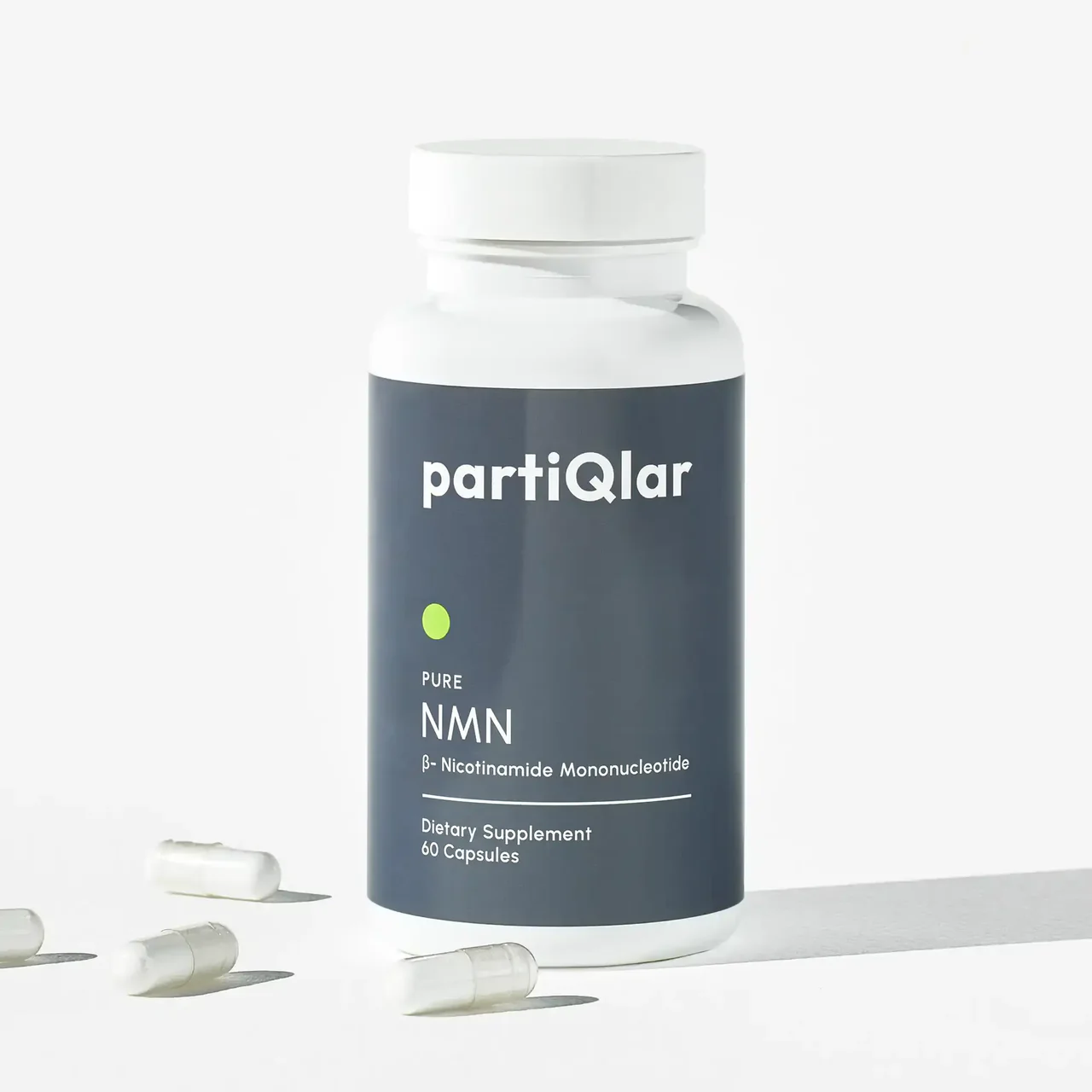
The Molecule Everyone Is Arguing About
Few supplements have generated as much excitement — or as much controversy — as NMN. Nicotinamide mononucleotide is a direct precursor to NAD+ (nicotinamide adenine dinucleotide), a coenzyme that sits at the center of virtually every energy-producing process in your cells. Harvard geneticist Dr. David Sinclair has called NAD+ “one of the most important molecules for life to exist” and has spent decades researching its role in aging. NMN became the subject of mainstream conversation when Sinclair appeared on the Joe Rogan Experience and laid out the science in plain terms that millions of people could follow.
Here’s the problem that NMN is trying to solve: NAD+ levels decline significantly with age. By the time you reach your 50s, your NAD+ levels may be half of what they were in your 20s. Lower NAD+ means slower DNA repair, less efficient mitochondria, reduced cellular stress response, and impaired metabolic function. The theory behind NMN supplementation is straightforward — give the body a direct precursor to NAD+ so it can replenish what aging has depleted.
The Rogan Conversation That Started It All
Joe Rogan Experience episode #1234 (2019) with Dr. David Sinclair put NMN in front of a mainstream audience for the first time at scale. The episode has been viewed tens of millions of times. Sinclair’s explanation was memorable: “You can think of resveratrol as the accelerator pedal for the sirtuin genes, and NMN is the fuel. Without the fuel, the accelerator won’t work. NMN is the gas in the car.”
Sirtuins are a family of proteins that regulate cellular health — DNA repair, mitochondrial biogenesis, inflammation control, and stress response. They require NAD+ to function. When NAD+ is plentiful, sirtuins are active. When NAD+ drops, sirtuin activity drops with it, and the cascade of biological aging accelerates. Sinclair’s lab work showed that restoring NAD+ in aging mice essentially reversed several markers of biological age — their muscle tissue, cardiovascular function, and endurance improved to near-juvenile levels.
Sinclair disclosed on the podcast that he personally takes 1g of NMN every morning. He also takes resveratrol (500mg), metformin, and several other compounds he has discussed openly as part of his personal anti-aging protocol. The caveat he always adds: he is experimenting on himself, and human trial data was limited at the time. That data has since grown considerably.
“NMN is the fuel. Resveratrol is the accelerator pedal. Without the fuel, the accelerator won’t work.” — Dr. David Sinclair, Joe Rogan Experience #1234
What NAD+ Actually Does
NAD+ participates in hundreds of metabolic reactions, but its most critical roles come down to three functions. First, it is the central molecule in oxidative phosphorylation — the process your mitochondria use to convert food into ATP, the energy currency your cells run on. Every calorie you burn goes through NAD+. Second, NAD+ is required by PARP enzymes, which detect and repair damaged DNA. DNA damage accumulates with age and is a primary driver of cancer and cellular senescence. Third, NAD+ is required by the sirtuin proteins discussed above, which regulate gene expression and cellular stress response.
When NAD+ is low, all three systems operate at reduced efficiency. Energy production is impaired. DNA damage accumulates faster than it can be repaired. Sirtuins slow down. The cumulative effect is what we recognize as biological aging at the cellular level.
The Insulin Sensitivity Research
The most directly relevant finding for people managing blood sugar came from a Washington University School of Medicine study published in Science in 2021. Researchers gave 500mg/day of NMN to overweight postmenopausal women with prediabetes for 10 weeks. The result: NMN significantly improved insulin-stimulated glucose disposal in skeletal muscle and enhanced insulin signaling in muscle tissue. The placebo group showed no change.
The NIH highlighted this study specifically, noting that NMN improved the ability of insulin to drive glucose uptake in muscle cells — which is precisely the process impaired in insulin resistance. The Washington University team (led by Dr. Samuel Klein) described it as the first human clinical evidence that NMN can reproduce the metabolic improvements previously seen only in mouse studies.
It is important to be honest about the limits of this finding. The study was small (25 women), short-term (10 weeks), and focused on a specific population. A subsequent meta-analysis of randomized controlled trials found that NMN supplementation did not produce statistically significant improvements in fasting blood glucose, HbA1c, or insulin resistance scores across broader populations. The picture is more complex than any single study suggests.
What we can say is this: the mechanism is real. NMN reliably raises NAD+ levels in humans — this is consistent across trials. Whether elevated NAD+ translates to clinically meaningful improvements in blood sugar control in T2D specifically remains an open research question.
What the Research Actually Shows (and Doesn’t)
As of 2026, NMN has completed more than a dozen human clinical trials. The consistent findings are: NMN supplementation reliably raises blood NAD+ levels (this is not disputed), is well-tolerated with minimal side effects, and shows promising signals in metabolic health, physical performance, and sleep quality in older adults.
What has not been proven in humans: lifespan extension, aging reversal, or the dramatic anti-aging effects seen in mouse studies. The translation from rodent to human biology has been slower than longevity researchers had hoped. Mice have much shorter lifespans, much faster metabolisms, and very different NAD+ dynamics than humans. The mouse studies were genuinely extraordinary. The human evidence is more modest but still interesting.
A ScienceDaily report from March 2026 noted that NAD+ research is showing particular promise in Alzheimer’s and Parkinson’s disease, where mitochondrial dysfunction and NAD+ depletion in neurons appear to play a significant role. Clinical trials in neurodegenerative disease are ongoing.
How to Take It
Dose: 250mg–1000mg daily is the range used in human trials. Most people start at 250–500mg and assess how they feel. David Sinclair takes 1g/day. Higher doses have not produced proportionally greater NAD+ elevation in all studies.
Timing: Morning is the most commonly used timing in trials and in Sinclair’s personal protocol. Some users report disrupted sleep if taken in the evening, which may reflect NAD+’s role in circadian rhythm regulation.
Form: Standard NMN powder or capsule. Sublingual (under the tongue) forms are marketed as better-absorbed, and some evidence suggests sublingual delivery does raise NAD+ levels efficiently, but the clinical difference over oral absorption at steady-state dosing appears minimal.
NMN vs. NR: Nicotinamide riboside (NR) is another NAD+ precursor with a similar research profile. NMN may have a more direct route to NAD+ in some tissues. Both have human trial evidence. NMN tends to cost more. The research does not clearly favor one over the other at this time.
Regulatory note: The FDA ruled in 2022 that NMN could not be marketed as a dietary supplement because it had been studied as a drug. That ruling was contested and the supplement market continued to sell it. As of 2026, NMN remains available as a supplement in most markets, though the regulatory landscape has been volatile.
This page is for informational purposes only and is not medical advice. Consult your physician before making changes to your medications or supplement regimen.
Sources
- Yoshino, M. et al. (2021). Nicotinamide mononucleotide increases muscle insulin sensitivity in prediabetic women. Science, 372(6547). doi: 10.1126/science.abe9985
- NIH Research Matters (2021). Supplement improves glucose metabolism in women’s muscle. nih.gov
- Joe Rogan Experience #1234 — David Sinclair (2019). Spotify / Podcast Notes. podcastnotes.org
- Liao, B. et al. (2021). Nicotinamide mononucleotide supplementation enhances aerobic capacity in amateur runners. Journal of the International Society of Sports Nutrition.
- Hou, Y. et al. (2022). NAD+ supplementation reduces neuroinflammation and cell senescence in Alzheimer’s disease via cGAS-STING. PNAS.
- ScienceDaily (2026). Scientists say NAD+ could slow aging and fight Alzheimer’s and Parkinson’s. sciencedaily.com
- PMC (2023). The safety and antiaging effects of nicotinamide mononucleotide in human clinical trials: an update. PMC10721522.
- AliveLongevity (2025). Does NMN actually work? What 2025 human trials say about NMN and NR for longevity. alivelongevity.com