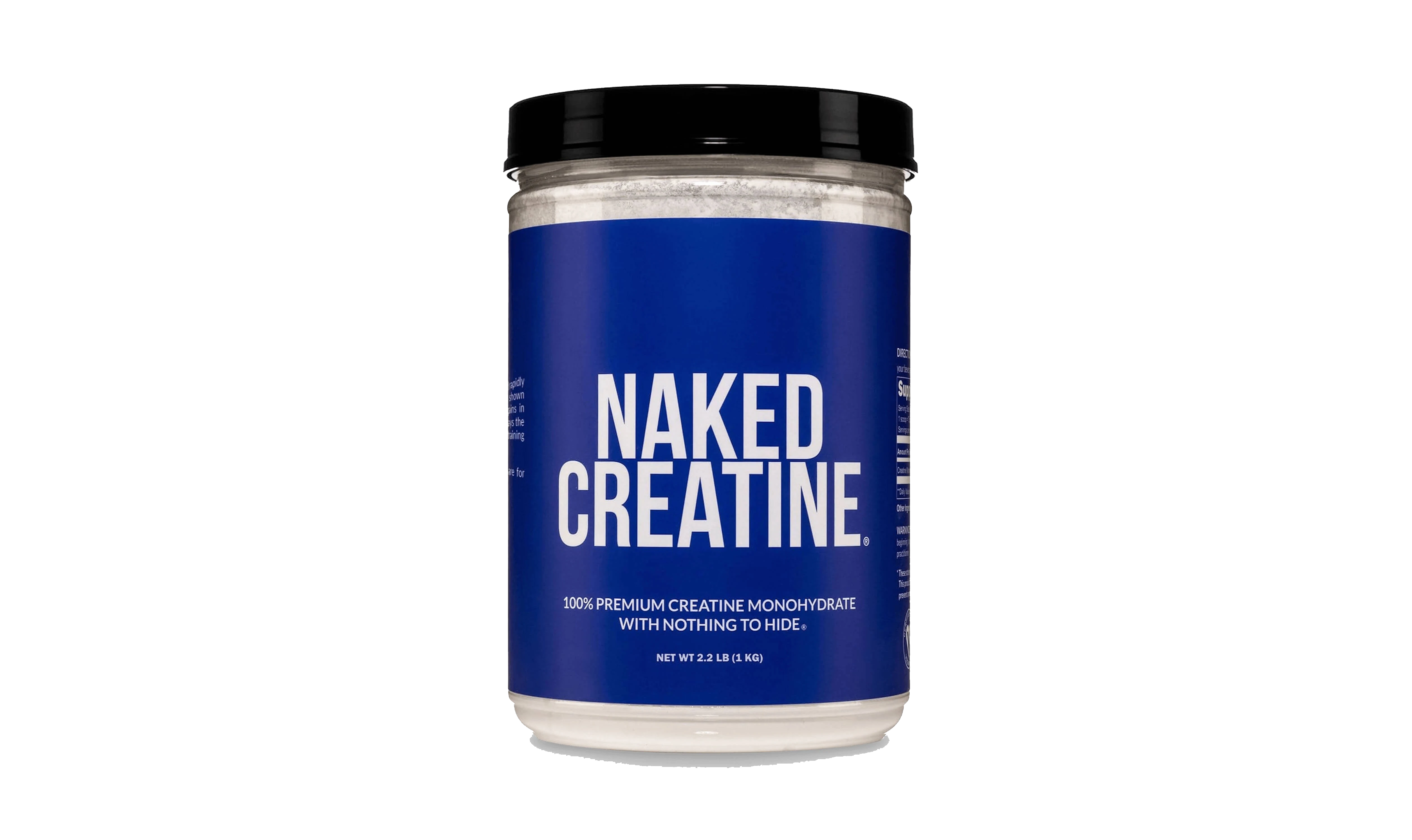
Not Just for Gym Bros Anymore
For decades, creatine was marketed almost exclusively to bodybuilders and competitive athletes. The tubs showed up in gym bags and weight rooms. The branding was all muscle and aggression. That framing did creatine a disservice, because the research that has accumulated over 30+ years points to a molecule with remarkably broad applications — for blood sugar control, brain function, protection against age-related muscle loss, and cardiovascular health.
Creatine is actually one of the most studied supplements in existence. The International Society of Sports Nutrition has called it “the most effective ergogenic nutritional supplement currently available” — but that description undersells it because “ergogenic” (performance-enhancing) is only part of the story. The story that matters for people over 50, and especially for people managing type 2 diabetes, is considerably bigger.
Your body makes creatine naturally, primarily in the liver, from the amino acids arginine, glycine, and methionine. You also get it from meat and fish in small amounts. But dietary intake rarely fully saturates your muscles’ creatine stores — which max out at roughly 160g for an average adult. Supplementation fills that gap and keeps stores consistently topped off.
Creatine and Blood Sugar
The connection between creatine and glucose metabolism is one of the least talked-about findings in diabetes research. Here’s the mechanism: creatine supplementation promotes the movement of GLUT-4 transporter proteins to the surface of muscle cells. GLUT-4 is the protein that physically moves glucose from your bloodstream into your muscles. When more GLUT-4 is expressed on the cell surface, your muscles can absorb more glucose without requiring extra insulin. This is essentially achieving insulin sensitization through a different door.
A randomized, double-blind, placebo-controlled trial published in Medicine & Science in Sports & Exercise found that creatine supplementation combined with exercise training reduced HbA1c by 1.1% over 12 weeks in type 2 diabetic patients, compared to exercise alone. The reduction was achieved without increasing insulin secretion — meaning the pancreas wasn’t doing more work. The muscle cells were just using glucose more efficiently.
A 2022 review of three randomized clinical trials classified creatine as “a hypoglycemic intervention for patients with type 2 diabetes, without major adverse events reported.” That is a meaningful statement. A 1.1% HbA1c reduction puts creatine in the same neighborhood as some pharmaceutical interventions, achieved through a mechanism that also improves physical function.
“GLUT-4 is the protein that moves glucose from your blood into your muscles. Creatine helps get more of it to the cell surface — achieving insulin sensitivity through a mechanism that has nothing to do with your pancreas.”
Sarcopenia: The Silent Emergency
After age 50, you lose roughly 1–2% of your muscle mass every year. Muscle strength declines even faster. By 65, this process has a clinical name: sarcopenia. It is one of the strongest predictors of falls, fractures, loss of independence, and premature death in older adults. It is also largely invisible until something goes wrong.
For people with type 2 diabetes, sarcopenia is an especially serious risk. Skeletal muscle is the primary tissue responsible for glucose uptake. Less muscle means less metabolic capacity to handle blood sugar. Sarcopenia and insulin resistance create a feedback loop: the worse your muscle mass, the worse your glucose control; the worse your glucose control, the harder it is to preserve muscle.
Creatine supplementation directly addresses this. A meta-analysis of studies in older women found that 5g/day of creatine monohydrate, combined with resistance training, significantly increased lean muscle mass compared to resistance training alone. The Frontiers in Physiology (2024) review confirmed that creatine plus resistance training outperforms resistance training alone for both muscle mass and strength in older adults. The creatine group consistently showed greater gains, regardless of training experience.
The UCLA Health system — not a supplement company — published a patient-facing summary in 2024 recommending creatine specifically for older adults and noting that it is “safe for long-term use at recommended doses” and beneficial for people who cannot or do not exercise intensely.
Brain Health and Cognitive Function
Your brain accounts for roughly 2% of your body weight but consumes 20% of your energy. That energy comes from ATP, and ATP regeneration depends on phosphocreatine. When cognitive demand is high — during complex tasks, under sleep deprivation, or as the brain ages — the phosphocreatine system becomes a rate-limiting factor. Supplemental creatine has been shown to increase brain phosphocreatine concentrations by 10–15%, measurable on MRI spectroscopy scans.
A 2024 systematic review and meta-analysis confirmed that creatine supplementation improved cognitive performance in healthy adults, with effects on memory, processing speed, and executive function. The benefits were most pronounced in older adults and in people under sleep deprivation or stress — conditions that deplete brain energy reserves.
More recently, 2026 research from Alzheimer’s studies has shown that 5g/day creatine monohydrate was associated with a roughly 30% slowing of early cognitive decline in controlled trials, correlating with the measurable increase in brain phosphocreatine on imaging. This is early-stage research and not a treatment claim, but it reflects the mechanistic basis: creatine supports the energy system the brain runs on.
There is also an important connection to depression and mental health. The brain’s energy deficit model of depression — the idea that depressive symptoms are partly driven by insufficient cellular energy in neural circuits — points to creatine as a potential adjunct. Early trials show antidepressant augmentation effects, particularly in women.
Cardiovascular and Metabolic Benefits
Beyond glucose and muscle, creatine has demonstrated reductions in triglycerides and homocysteine — two cardiovascular risk markers that are often elevated in people with insulin resistance. Elevated homocysteine is an independent risk factor for cardiovascular disease and stroke. Creatine reduces homocysteine levels by acting as a methyl group acceptor in the homocysteine-to-methionine conversion pathway — essentially mopping up excess homocysteine before it can accumulate.
In studies of older adults, creatine supplementation has also been associated with improvements in bone mineral density when combined with resistance training — another compounding benefit for anyone at risk of osteoporosis.
How to Take It
Dose: 3–5g of creatine monohydrate per day. This is the form with the most research behind it. Avoid “buffered” or proprietary forms marketed as superior — the evidence strongly favors plain monohydrate. Generic creatine monohydrate from a reputable manufacturer is identical in function to any premium brand.
Loading phase: not necessary. Older protocols recommended a 5–7 day loading phase at 20g/day to saturate stores faster. This works but is not required. Taking 5g daily will fully saturate creatine stores in 3–4 weeks with no GI side effects. Loading can cause water retention and occasional cramping during the first week.
Timing: Timing matters less than consistency. Post-workout with food is a reasonable default, but studies comparing pre- versus post-workout and morning versus evening supplementation show minimal differences at steady-state dosing. Take it when you’ll remember it.
With water: Creatine draws water into muscle cells. Stay well-hydrated. Some people notice a 1–2 lb weight increase in the first couple of weeks from intramuscular water retention. This is normal and reflects the muscles storing more creatine and water alongside it — not fat gain.
Safety: Creatine has one of the strongest safety profiles of any widely used supplement. Decades of research at doses up to 30g/day show no kidney damage in healthy individuals. The “creatine damages kidneys” concern arose from confusion between creatinine (a waste product measured in kidney panels) and creatine. Creatine supplementation raises creatinine levels on labs — not because it is damaging kidneys, but because creatinine is a byproduct of creatine metabolism. If your doctor flags high creatinine while you are taking creatine, make sure they know you are supplementing.
This page is for informational purposes only and is not medical advice. Consult your physician before making changes to your medications or supplement regimen.
Sources
- Gualano, B. et al. (2011). Creatine in type 2 diabetes: a randomized, double-blind, placebo-controlled trial. Medicine & Science in Sports & Exercise, 43(5).
- Pinto, C.L. et al. (2016). Creatine supplementation and glycemic control: a systematic review. Amino Acids, 48(9).
- Rawson, E.S. & Venezia, A.C. (2011). Use of creatine in the elderly and evidence for effects on cognitive function in young and old. Amino Acids, 40(5).
- Sandkühler, J.F. et al. (2023). Effects of creatine supplementation on cognitive function in adults: a systematic review and meta-analysis. Nutrients.
- Frontiers in Physiology (2024). The power of creatine plus resistance training for healthy aging: enhancing physical vitality and cognitive function. doi: 10.3389/fphys.2024.1496544
- PMC (2021). Potential of creatine in glucose management and diabetes. Nutrients. PMC7915263.
- UCLA Health (2024). Why everyone's talking about creatine. uclahealth.org
- Ubie Health (2026). Alzheimer's & Creatine: 2026 breakthroughs in brain energy. ubiehealth.com