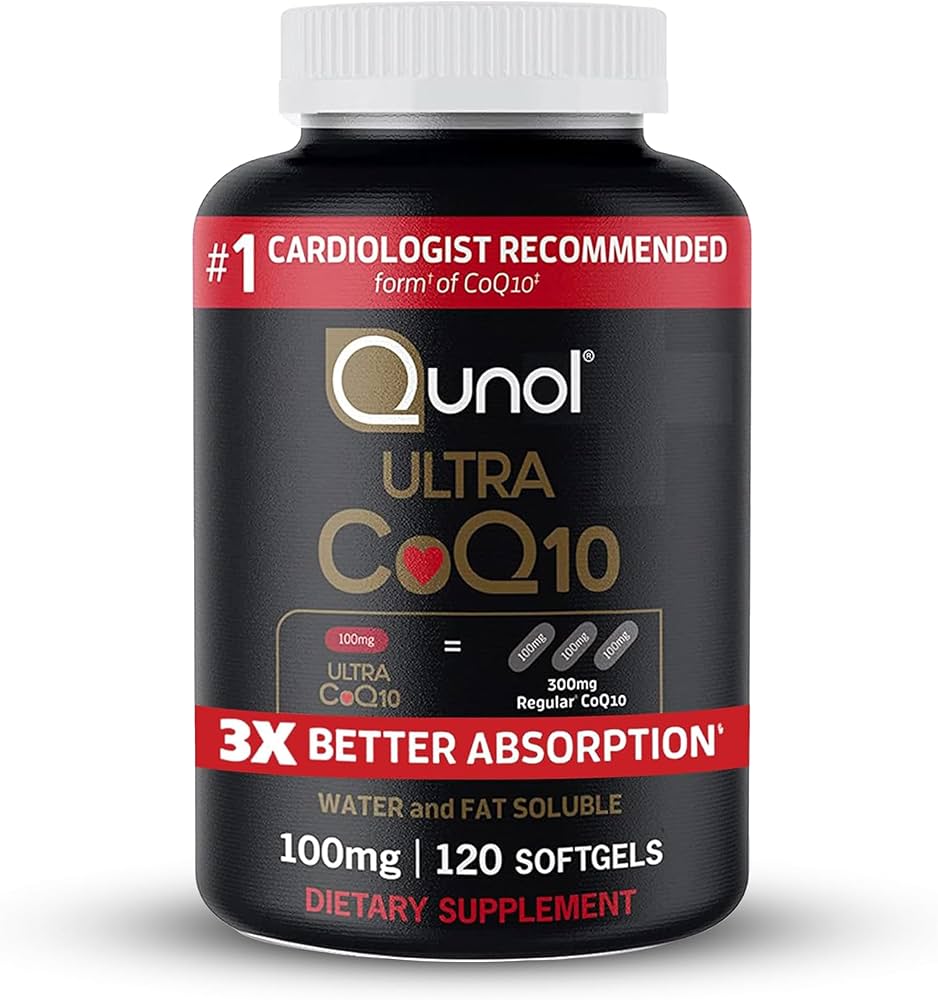
The Molecule Your Statin Is Stealing
If you are on a statin — atorvastatin, rosuvastatin, simvastatin — your doctor prescribed it to lower your LDL cholesterol. What they likely did not mention is that statins work by blocking the mevalonate pathway, which produces cholesterol. The same pathway also produces CoQ10. Statins lower CoQ10 levels as a side effect of how they work, and that depletion has measurable consequences for mitochondrial function, muscle health, and blood sugar control. (Note: if you have a choice of statin, pitavastatin depletes CoQ10 less than atorvastatin or rosuvastatin due to its limited penetration into non-liver tissue — worth asking your doctor about.)
CoQ10 (coenzyme Q10, also called ubiquinone in its oxidized form) is a fat-soluble compound found in every cell in your body. Its primary role is in the mitochondrial electron transport chain — the process by which your cells convert food into ATP, the molecule that powers everything you do. Without adequate CoQ10, mitochondria cannot run the electron transport chain efficiently. Energy production drops, oxidative stress increases, and cells that depend on high energy output — heart muscle cells, skeletal muscle cells, neurons — suffer the most.
Your body makes CoQ10 naturally, and production peaks in your 20s. By your 40s it has declined by roughly 30%. By your 60s, decline is significant. Add a statin on top of age-related depletion, and the deficit becomes clinically relevant.
CoQ10 and Diabetes Risk
A 2025 review published in PMC made a connection that most patients on statins have never heard: statin therapy is independently associated with an increased risk of new-onset diabetes, and CoQ10 depletion may be the mechanism. The reasoning is direct. CoQ10 is required for mitochondrial function in pancreatic beta cells — the cells that produce insulin. When CoQ10 is low, mitochondrial oxidative stress in beta cells increases. The result can be beta cell apoptosis (cell death), reduced insulin secretion, and impaired glucose control.
For people who already have T2D or insulin resistance, this creates a compounding problem: statins are routinely prescribed to manage cardiovascular risk in diabetic patients — a risk that is real and significant — but the same medication may be worsening the underlying metabolic dysfunction. CoQ10 supplementation may partially offset this effect by restoring mitochondrial function in beta cells.
“Statins block the mevalonate pathway to lower cholesterol. That same pathway produces CoQ10. If you’re on a statin and haven’t heard of CoQ10, this is the conversation your doctor skipped.”
Heart Failure and the Q-SYMBIO Trial
The most significant clinical evidence for CoQ10 comes from cardiovascular medicine. The Q-SYMBIO trial — a multicenter, randomized, double-blind, placebo-controlled study — found that 300mg/day of CoQ10 in patients with heart failure significantly reduced major adverse cardiovascular events by 43% over two years, compared to placebo. Cardiovascular mortality was reduced by 42%. These are the kinds of numbers that move a supplement from “maybe helpful” to “clinically meaningful.”
A 2024 systematic review and meta-analysis of prospective cohort studies confirmed CoQ10’s cardioprotective effects, including improvements in ejection fraction (a measure of how effectively the heart pumps), exercise tolerance, and quality of life in heart failure patients. For people with T2D — who face two to four times the cardiovascular risk of the general population — this evidence is not peripheral. It is directly relevant.
Statin Myopathy and Muscle Pain
The most common reason people stop taking statins is muscle pain — statin-associated muscle symptoms (SAMS), which affect an estimated 5–20% of statin users. The proposed mechanism is mitochondrial dysfunction in skeletal muscle, driven partly by CoQ10 depletion. If the mitochondria in your muscle cells cannot produce enough ATP, muscle fibers become susceptible to damage and fatigue.
Clinical trials on CoQ10 for statin myopathy have produced mixed results — some showing meaningful symptom relief, others showing no significant benefit. A 2025 meta-analysis found a modest but statistically significant reduction in muscle pain scores with CoQ10 supplementation. The effect is real but inconsistent, possibly because SAMS has multiple contributing mechanisms beyond CoQ10 alone. That said, the risk-to-benefit ratio strongly favors trying CoQ10 supplementation before discontinuing a statin you need for cardiovascular protection.
Ubiquinol vs. Ubiquinone: The Form Matters
Most inexpensive CoQ10 supplements contain ubiquinone — the oxidized, inactive form. Before your mitochondria can use it, your body must convert ubiquinone to ubiquinol, the active reduced form. This conversion is efficient in younger people but becomes progressively less efficient with age. In people over 50, ubiquinol absorption and bioavailability is significantly higher than ubiquinone.
For anyone over 50, or anyone with significant health challenges that impair cellular conversion, ubiquinol is the preferred form. It is more expensive, but you are paying for bioavailability you can actually use. Doses of 100–200mg of ubiquinol are functionally equivalent to 300–600mg of ubiquinone in many studies of older adults.
How to Take It
Dose: 100–300mg daily. For statin myopathy or active cardiovascular disease, 200–300mg is the range used in most trials. For general mitochondrial support, 100–200mg is sufficient.
On a statin? CoQ10 is not optional. If you are taking atorvastatin, rosuvastatin, or simvastatin — especially at high intensity doses (atorvastatin 40–80mg, rosuvastatin 20–40mg) — CoQ10 supplementation should be considered a companion therapy, not an afterthought. These are the doses that drive the most significant CoQ10 depletion, the highest muscle symptom rates, and the strongest association with statin-induced insulin resistance. See the full breakdown on our Statins page.
Form: Ubiquinol if you are over 50 or on a statin. Ubiquinone if you are younger and budget-conscious — the conversion is more efficient in younger people.
Timing: With food, specifically with a fat-containing meal. CoQ10 is fat-soluble, and absorption increases substantially when taken with dietary fat. Avoid taking on an empty stomach.
Safety: CoQ10 has an excellent safety profile at standard doses. It may mildly lower blood pressure, so monitor if you are already on antihypertensives. It can interact with warfarin (blood thinners) — consult your physician if you are on anticoagulation therapy.
This page is for informational purposes only and is not medical advice. Consult your physician before making changes to your medications or supplement regimen.
Sources
- PMC (2025). Diabetes risks of statin therapy — coenzyme Q10 may help. PMC11868890.
- Mortensen, S.A. et al. (2014). The effect of coenzyme Q10 on morbidity and mortality in chronic heart failure (Q-SYMBIO). JACC Heart Failure, 2(6).
- medrxiv (2024). The role of coenzyme Q10 in cardiovascular disease treatment: an updated systematic review and meta-analysis (1990–2024).
- PMC (2025). Effects of coenzyme Q10 supplementation on myopathy in statin-treated patients: a systematic review and meta-analysis. PMC12554813.
- Raizner, A.E. & Quiñones, M.A. (2021). Coenzyme Q10 for patients with cardiovascular disease. Methodist DeBakey Cardiovascular Journal.
Related Reading
If you are on a statin — or your doctor is recommending one — our deep-dive covers the full CoQ10 depletion picture, statin-induced diabetes risk, and which statin has the most favorable metabolic profile: Statins — The Meds →